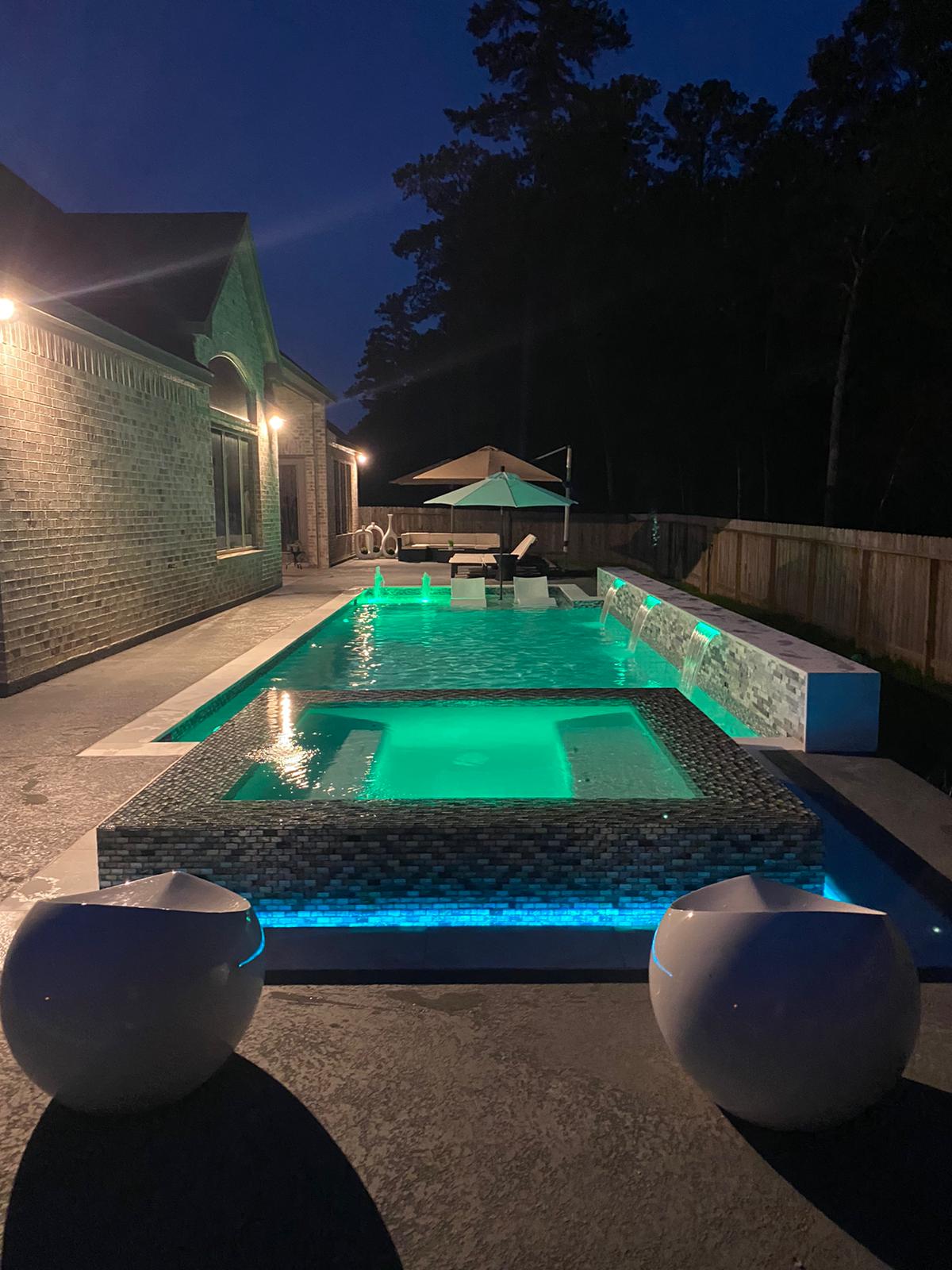
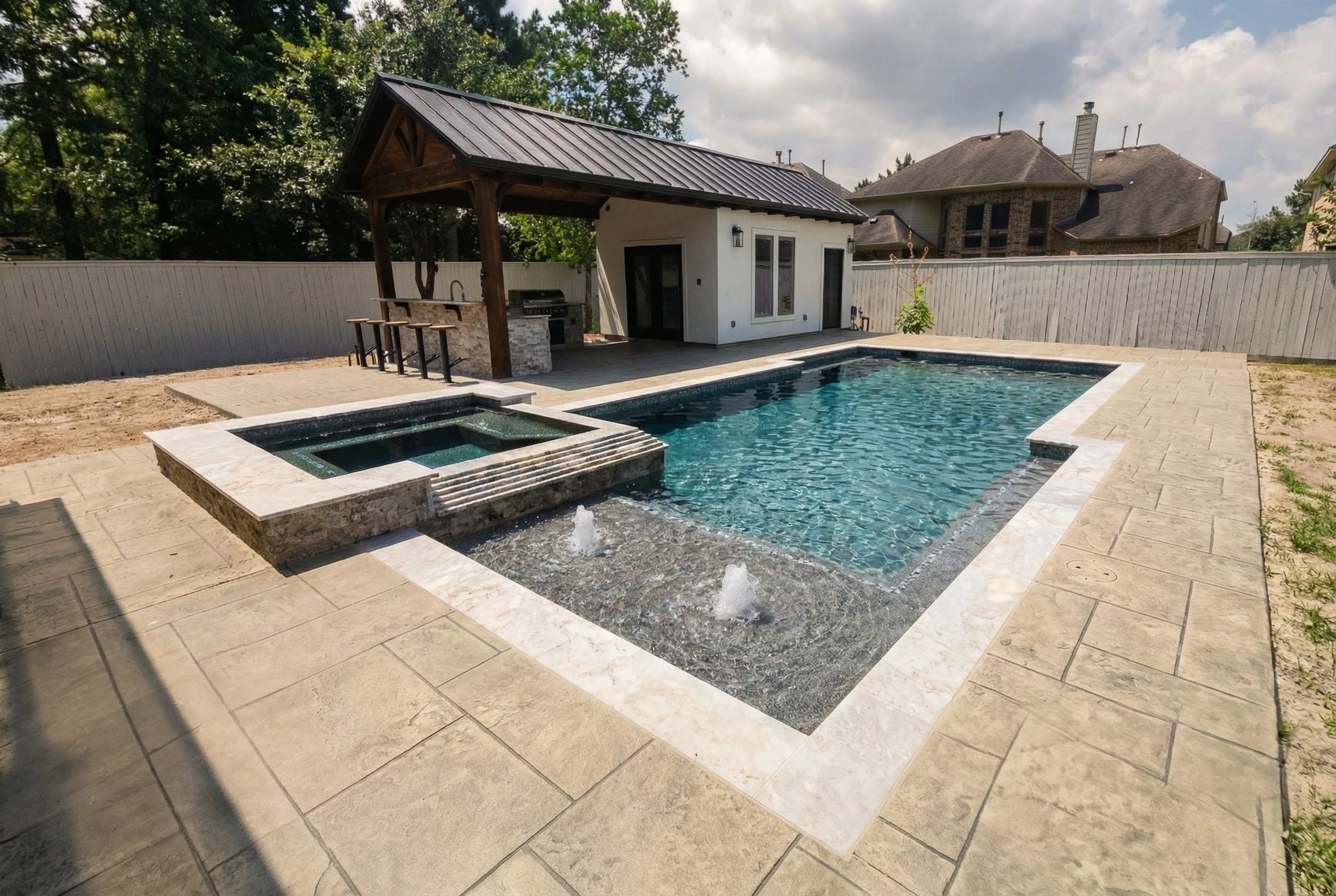
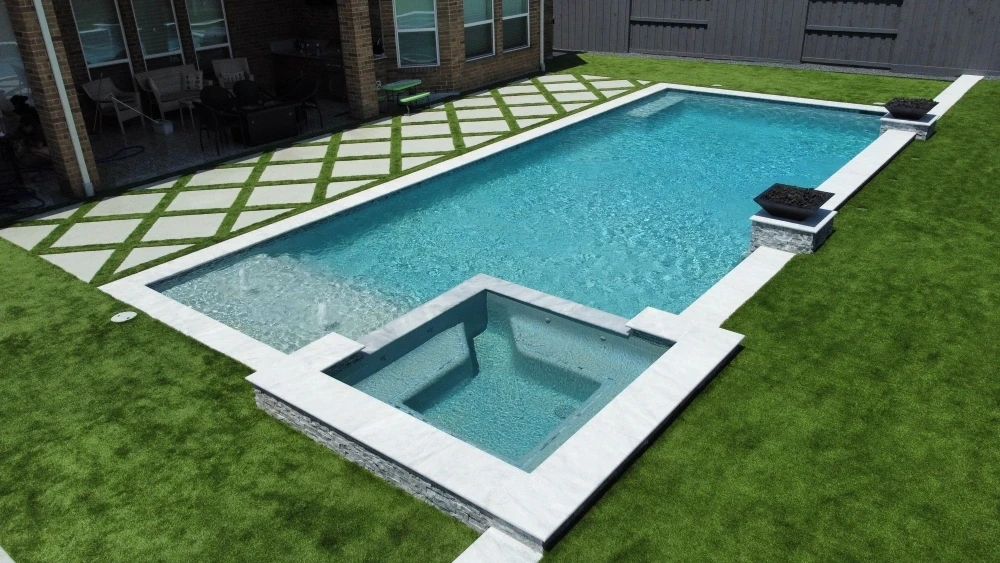
Choosing between a rectangle and freeform pool in Richmond, TX starts with your yard and how you want to use it. A rectangular pool offers straight edges and a clearly defined layout. A freeform pool uses curves to create a softer outline that can respond to different spaces.
Neither shape is automatically better. The right choice depends on swimming activities, seating, patio space, property constraints, and the style you prefer.
At LD Outdoors Design, we create custom pools and outdoor living spaces. Here is how to compare these two design directions before choosing a layout for your backyard.
Start With How You Want to Use the Pool
Before choosing straight lines or curves, describe what you want to do in the water. Swimming for exercise, playing games, and relaxing on a shallow ledge each place different demands on the layout.
A rectangular pool can offer a clear swimming path. However, its usefulness still depends on length, depth, and the placement of steps or seating. A rectangle with a large tanning ledge may have less open swimming room than its outside dimensions suggest.
A freeform pool can include wider areas for gathering and narrower sections that shape the layout. Those curves should support your activities rather than leave awkward spaces you rarely use.
Discuss your priorities:
Do you want an uninterrupted swimming route?
Will people spend more time sitting or moving through the water?
Is shallow lounging space a priority?
How much room should remain for group activities?
Use the answers to compare actual plans. A shape name alone does not tell you how the pool will function.
Compare Each Shape Against Your Property
The same pool can work well in one backyard and feel crowded in another. Start with the property dimensions, access needs, and applicable restrictions before deciding where the water should go.
Rectangular pools can align neatly with a house, patio, or other straight edges. That alignment may make it easier to organize the surrounding space into clear areas.
Freeform pools offer a different approach. A curve may help shape a seating area or respond to an irregular layout. However, curves do not automatically save room. Some designs leave narrow spaces between the pool and other features that are difficult to use.
Ask your designer to compare both options on the same property plan.
LD Outdoors Design’s swimming pool construction process begins with an on-site consultation to review your goals and property. That review provides a starting point for discussing pool placement, access, and the space available around it.
Protect Room for Patios and Furniture
Pool shape affects the space around the water as much as the space within it. Look closely at what remains for walking, dining, and relaxing.
Straight pool edges can work well beside rows of lounge chairs or a rectangular dining area. A curved edge may create an inviting seating pocket, but the furniture still needs enough usable surface beneath and around it.
Ask to see furniture on the plan at its actual size. Include room for dining chairs to pull out and for people to pass occupied seating.
Trace the routes between the house, pool entry, and gathering areas. A layout should remain practical when the backyard is being used.
If you are planning an outdoor kitchen, review its position alongside the pool. Coordinating your outdoor kitchen layout with cooking, dining, and walking routes can help you compare how each pool shape affects the whole yard.
Match the Design to Your Home and Preferences
Rectangular pools are often associated with modern design, while freeform pools are often associated with a more natural appearance. Both shapes can support a wider range of styles through their finishes and surrounding details.
A rectangle can feel warm and relaxed with coordinated stone, planting, and comfortable seating. A freeform pool can have a restrained appearance when its curves and material selections are kept simple.
Think about the lines already present in your home. Look at windows, doors, rooflines, and existing outdoor surfaces. Decide whether you want the pool to follow those lines or introduce a softer shape.
Browse completed LD Outdoors Design projects and identify the details you like. Separate your response to the pool’s shape from your response to its tile, water color, landscaping, or furniture.
That distinction helps your designer understand what you want to bring into your own project.
Plan Seating, Shade, and Water Features Together
Steps, benches, and tanning ledges need to work within the chosen shape. Ask where each feature will sit and how it affects the remaining water area.
In a rectangular design, a ledge across one end can create a defined lounging zone. In a freeform design, seating may follow a curve. Neither arrangement is useful unless its dimensions fit the activities you have planned.
Discuss swimming pool water feature construction at the same time. A feature should relate to the pool’s proportions, nearby seating, and the view from the house.
Pool lighting installation also belongs in the early plan. Ask how fixture placement will address the pool’s geometry and viewing angles.
For pergola construction, review the shade location alongside the patio and walking routes. LD Outdoors Design offers these options through its pool and outdoor living services, allowing you to discuss the surrounding space with the pool.
Compare Complete Designs Before Comparing Prices
Do not assume one shape will always cost less. Pool dimensions, depth, structural requirements, finishes, equipment, site conditions, and surrounding work all contribute to the project.
A simple rectangular pool and a detailed freeform pool are not equivalent proposals. Neither are two pools with different patio areas or equipment selections.
Ask for a comparison that keeps your main requirements consistent. Review the usable swimming space, seating, materials, features, and included outdoor improvements.
During the design review, ask your builder to explain any price differences. Find out which come from the shape and which come from other choices.
For upkeep, discuss equipment and cleaning access for the actual design. Avoid choosing a shape based on a broad promise that every rectangle or every freeform pool is easier to maintain.
A Simple Way to Compare Your Options
Before approving either layout, ask yourself:
Which plan best supports the activities I care about?
Where will furniture fit comfortably?
Are the walking routes clear?
Does the pool leave useful space around it?
Are steps, benches, and ledges proportioned well?
Do I prefer the view from the house?
Am I comparing the same construction scope and features?
If one design looks better but functions worse, bring that concern back to your designer. Adjusting proportions or moving a feature may help resolve the difference.
Frequently Asked Questions About Pool Shapes
Is a rectangular pool better for a small backyard?
It can be a good fit when straight edges align with the available space. However, the best layout depends on the property and the room needed around the pool. Compare measured plans rather than assuming a rectangle will always fit better.
Can a freeform pool work with a modern home?
Yes. The overall appearance depends on the curves, finishes, and surrounding design. A freeform pool with a simple outline and coordinated materials can complement a modern home without requiring a heavily landscaped or rock-lined setting.
Can both shapes include a tanning ledge or built-in seating?
Both can be designed with those features. Ask to review their dimensions and how much swimming space remains. Their usefulness depends on placement and proportion, not simply whether the pool has straight or curved edges.
Explore Pool Shapes With LD Outdoors Design
The right pool shape brings your activities, available space, and design preferences together. Comparing complete layouts gives you a clearer basis for choosing than looking at shapes alone.
LD Outdoors Design creates custom pools and outdoor living spaces for Richmond homeowners. Request a pool design consultation to explore rectangle and freeform options for your backyard.
Question in Mind? Contact us
PHONE
Question in Mind? Contact us
PHONE
Other Blogs
Other Similar Blogs
Explore more pool design ideas, building tips, and backyard inspiration from LD Outdoors Design to help bring your dream pool to life.
Other Blogs
Other Similar Blogs
Explore more pool design ideas, building tips, and backyard inspiration from LD Outdoors Design to help bring your dream pool to life.
Other Blogs
Other Similar Blogs
Explore more pool design ideas, building tips, and backyard inspiration from LD Outdoors Design to help bring your dream pool to life.