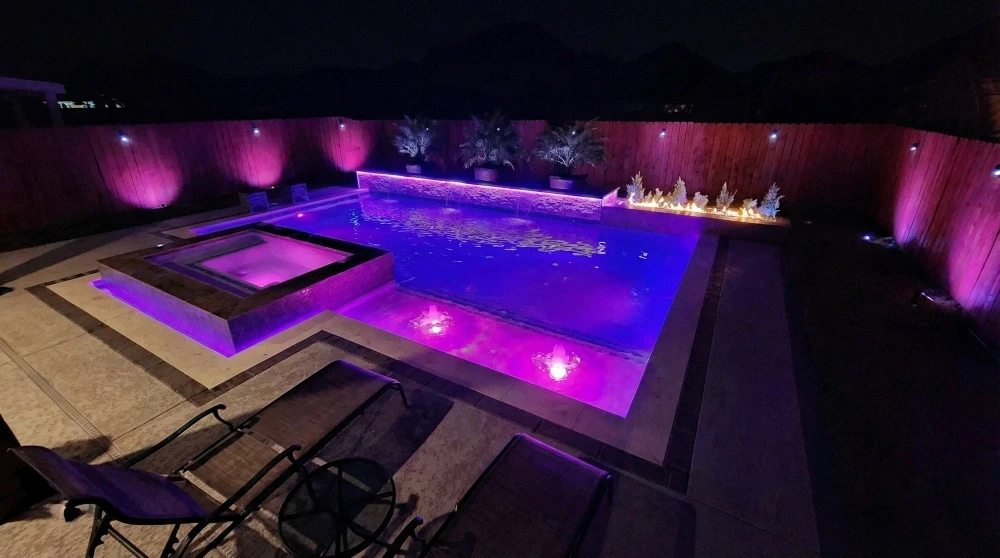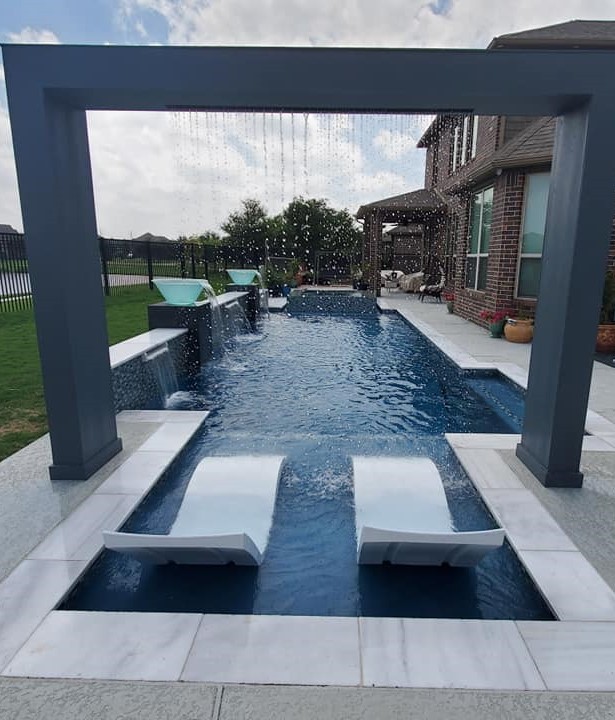
Choosing pool water features in Richmond, TX starts with deciding what you want moving water to add to your backyard. You might enjoy a gentle sound beside your seating area, a waterfall visible from the house, or a subtle feature on a shallow ledge.
Waterfalls, bubblers, and sheer descents create different effects. Their appearance matters, but so do sound, splash, equipment needs, and care. The best fit depends on your pool’s layout and how you plan to use the surrounding space.
At LD Outdoors Design, we create custom pools and outdoor living spaces. Here is how to compare water features before adding them to your design.
Start With the Experience You Want
Before choosing a feature, think about where you will spend time and what you want to hear from that location.
A feature beside a quiet seating area serves a different purpose than one designed as a focal point across the yard. Moving water may be enjoyable while relaxing but more noticeable during a conversation or outdoor meal.
Explain your preferences to your designer:
Do you want gentle background sound or a stronger water effect?
Should the feature be visible from inside the house?
Will you use it mainly during the day or evening?
How close will people sit to it?
Do you want it running during most pool use or only occasionally?
A photograph cannot answer the sound question. If possible, ask to hear a comparable operating feature and discuss how the proposed size and flow may differ.
Pool Waterfalls Create a Distinct Focal Point
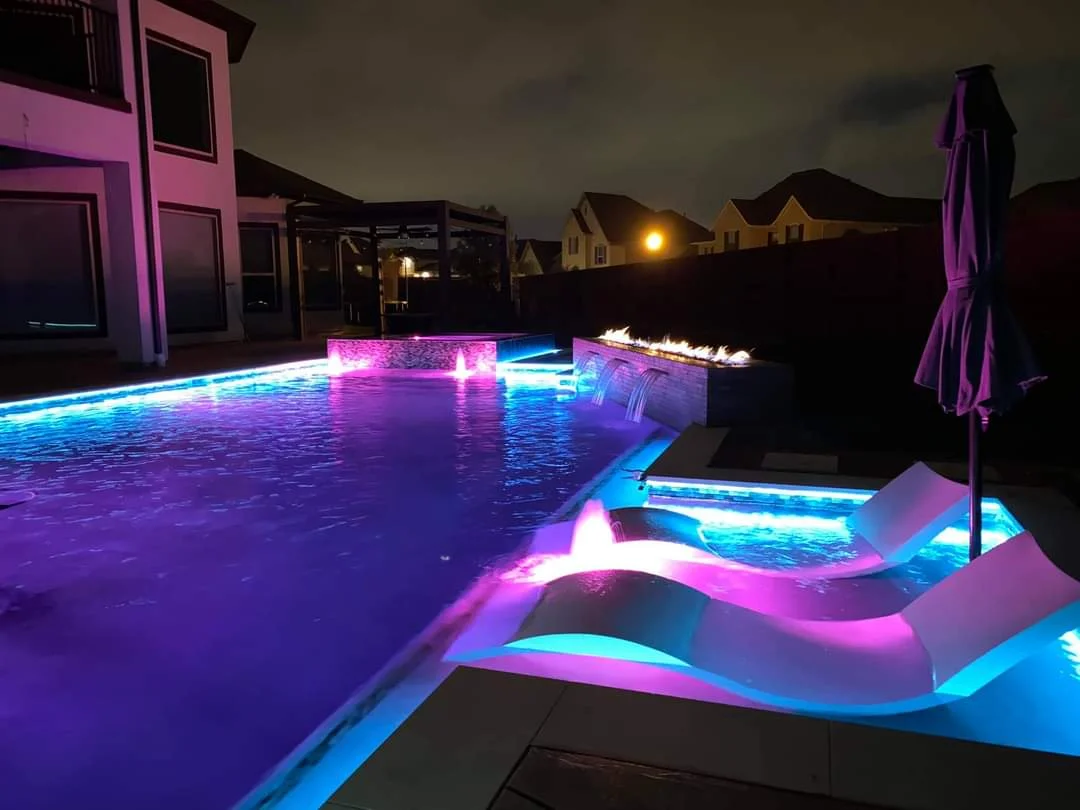
Pool waterfalls can take several forms, from water flowing over stone to a feature built into a raised wall. The materials and proportions help determine whether the result feels natural, architectural, or somewhere between the two.
Think about how much attention you want the waterfall to draw. A large structure can become the main visual element in the backyard. A smaller design may fit more comfortably with the pool and seating area.
Ask how the feature will look from several locations, including the back door and nearby windows. Also review its appearance when the water is switched off.
Discuss access for cleaning and service. Decorative surfaces should not make necessary equipment or components difficult to reach.
Browse completed LD Outdoors Design projects to identify styles you like. Bring specific details to your consultation, such as the shape, materials, or relationship between a feature and the pool.
Bubblers Add Movement Close to the Water
Bubblers introduce water upward through an outlet, often within a shallow area of the pool. They can add movement without requiring a tall structure beside the water.
Their effect depends on the selected equipment, placement, water depth, and flow. Ask your builder to explain how the proposed arrangement will operate.
If bubblers are planned for a tanning ledge, review them alongside in-water furniture and entry routes. Confirm where the outlets will sit and how they relate to the way you intend to use that area.
Consider whether you want a subtle effect or a more noticeable stream. Ask what adjustment is available and whether lighting is included or separate.
A compact feature still needs planning. Its plumbing, controls, and service access should be part of the design rather than left for a late decision.
Sheer Descents Offer a Defined Sheet of Water
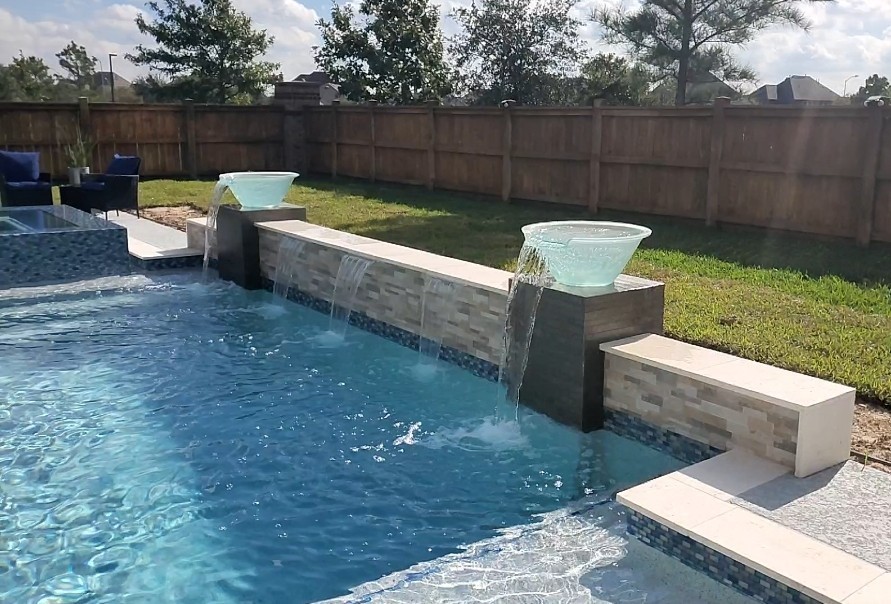
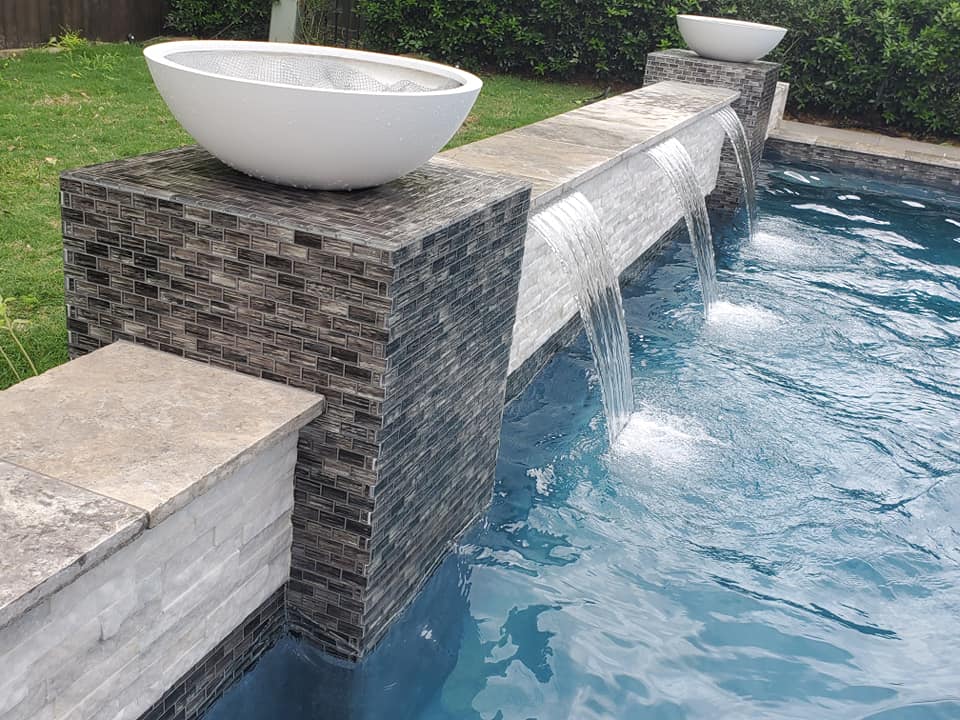
A sheer descent creates a sheet of falling water from an outlet, commonly incorporated into a raised wall or similar structure.
This style can suit a design with clear lines, but its appearance depends on more than the outlet itself. The width, drop, flow, and surrounding materials all contribute to the result.
Ask your designer to explain the proposed proportions. A wider feature is not automatically the better choice, especially in a smaller backyard.
Review where the water will land and how that relates to seating, steps, and the pool edge. Discuss expected splash and how wind may affect the stream.
The supporting wall also becomes part of the pool’s appearance. Compare its finish with the coping and waterline tile so the feature looks like part of the original plan.
Plan Placement With Seating and Walking Routes
A water feature should work with the surrounding yard. Before approving its location, review the pool entry, patio furniture, and routes between the house and gathering areas.
Consider whether people will walk close to the feature or sit beside it for long periods. Ask how splash will be handled and what space should remain around it.
If your plans include cooking and dining outside, review the feature from those areas too. Coordinating your outdoor kitchen layout with seating and moving water helps you discuss the whole experience.
For your Richmond backyard, also consider the view from shaded seating. You may prefer to watch the feature from a comfortable distance rather than place it immediately beside your chairs.
LD Outdoors Design offers swimming pool water feature construction through its pool and outdoor living services, allowing placement to be discussed alongside patios, pergolas, and other improvements.
Coordinate Plumbing, Controls, and Lighting Early
Water features need equipment and plumbing suited to the proposed design. Ask whether the feature uses shared equipment or requires separate components, and how it will be controlled.
Understand what the proposal includes. A rendering may show moving water and an evening glow, but the written scope should identify the actual feature, lighting, and controls.
Pool lighting installation can complement moving water when the fixtures and viewing angles are planned together. Discuss glare from nearby seats and what the feature will look like from inside the house.
These decisions belong in the early project conversations. LD Outdoors Design’s swimming pool construction process includes custom planning and design so features can be reviewed before construction.
If you want to add something later, mention it now. Your builder can explain what preparation is practical and what future work may involve.
Compare Care Requirements Before Choosing
Every feature should be reviewed for the care it will need. Ask about cleaning the visible surfaces, checking outlets, and accessing equipment.
Find out which instructions apply to the specific products and materials being proposed. Do not assume a feature needs little attention simply because it is small.
Useful questions include:
How are the outlets and surrounding surfaces cleaned?
Which components may need service?
Can flow be adjusted through the supplied controls?
What operating instructions will be provided?
Are any seasonal precautions required?
Who should I contact if the water flow changes?
Also ask about expected operating requirements. The equipment arrangement and how often you run the feature affect its use. Compare complete designs rather than judging by appearance alone.
Frequently Asked Questions About Pool Water Features
Which pool water feature is the quietest?
There is no single answer based only on the feature’s name. Flow, drop height, landing surface, and distance from seating affect what you hear. Ask to review a comparable operating example and discuss the effect you prefer.
Can I add a waterfall to an existing pool?
It may be possible, depending on the pool, available space, structure, plumbing, and equipment. A site review is needed to understand the work involved. Ask what would need to be altered before choosing a design.
Do I need to run a water feature all the time?
Ask your builder for operating instructions for the installed system. Some designs allow independent control, but the arrangement must be confirmed. Discuss your preferred schedule during planning so the controls suit how you want to use it.
Explore Pool Water Features With LD Outdoors Design
The right water feature adds something you enjoy seeing, hearing, and using. Comparing placement, proportions, controls, and care helps you choose with more confidence.
LD Outdoors Design creates custom pools and outdoor living spaces for Richmond homeowners. Request a pool design consultation to discuss waterfalls, bubblers, and sheer descents for your backyard.
Choosing pool water features in Richmond, TX starts with deciding what you want moving water to add to your backyard. You might enjoy a gentle sound beside your seating area, a waterfall visible from the house, or a subtle feature on a shallow ledge.
Waterfalls, bubblers, and sheer descents create different effects. Their appearance matters, but so do sound, splash, equipment needs, and care. The best fit depends on your pool’s layout and how you plan to use the surrounding space.
At LD Outdoors Design, we create custom pools and outdoor living spaces. Here is how to compare water features before adding them to your design.
Start With the Experience You Want
Before choosing a feature, think about where you will spend time and what you want to hear from that location.
A feature beside a quiet seating area serves a different purpose than one designed as a focal point across the yard. Moving water may be enjoyable while relaxing but more noticeable during a conversation or outdoor meal.
Explain your preferences to your designer:
Do you want gentle background sound or a stronger water effect?
Should the feature be visible from inside the house?
Will you use it mainly during the day or evening?
How close will people sit to it?
Do you want it running during most pool use or only occasionally?
A photograph cannot answer the sound question. If possible, ask to hear a comparable operating feature and discuss how the proposed size and flow may differ.
Pool Waterfalls Create a Distinct Focal Point
Pool waterfalls can take several forms, from water flowing over stone to a feature built into a raised wall. The materials and proportions help determine whether the result feels natural, architectural, or somewhere between the two.
Think about how much attention you want the waterfall to draw. A large structure can become the main visual element in the backyard. A smaller design may fit more comfortably with the pool and seating area.
Ask how the feature will look from several locations, including the back door and nearby windows. Also review its appearance when the water is switched off.
Discuss access for cleaning and service. Decorative surfaces should not make necessary equipment or components difficult to reach.
Browse completed LD Outdoors Design projects to identify styles you like. Bring specific details to your consultation, such as the shape, materials, or relationship between a feature and the pool.
Bubblers Add Movement Close to the Water
Bubblers introduce water upward through an outlet, often within a shallow area of the pool. They can add movement without requiring a tall structure beside the water.
Their effect depends on the selected equipment, placement, water depth, and flow. Ask your builder to explain how the proposed arrangement will operate.
If bubblers are planned for a tanning ledge, review them alongside in-water furniture and entry routes. Confirm where the outlets will sit and how they relate to the way you intend to use that area.
Consider whether you want a subtle effect or a more noticeable stream. Ask what adjustment is available and whether lighting is included or separate.
A compact feature still needs planning. Its plumbing, controls, and service access should be part of the design rather than left for a late decision.
Sheer Descents Offer a Defined Sheet of Water
A sheer descent creates a sheet of falling water from an outlet, commonly incorporated into a raised wall or similar structure.
This style can suit a design with clear lines, but its appearance depends on more than the outlet itself. The width, drop, flow, and surrounding materials all contribute to the result.
Ask your designer to explain the proposed proportions. A wider feature is not automatically the better choice, especially in a smaller backyard.
Review where the water will land and how that relates to seating, steps, and the pool edge. Discuss expected splash and how wind may affect the stream.
The supporting wall also becomes part of the pool’s appearance. Compare its finish with the coping and waterline tile so the feature looks like part of the original plan.
Plan Placement With Seating and Walking Routes
A water feature should work with the surrounding yard. Before approving its location, review the pool entry, patio furniture, and routes between the house and gathering areas.
Consider whether people will walk close to the feature or sit beside it for long periods. Ask how splash will be handled and what space should remain around it.
If your plans include cooking and dining outside, review the feature from those areas too. Coordinating your outdoor kitchen layout with seating and moving water helps you discuss the whole experience.
For your Richmond backyard, also consider the view from shaded seating. You may prefer to watch the feature from a comfortable distance rather than place it immediately beside your chairs.
LD Outdoors Design offers swimming pool water feature construction through its pool and outdoor living services, allowing placement to be discussed alongside patios, pergolas, and other improvements.
Coordinate Plumbing, Controls, and Lighting Early
Water features need equipment and plumbing suited to the proposed design. Ask whether the feature uses shared equipment or requires separate components, and how it will be controlled.
Understand what the proposal includes. A rendering may show moving water and an evening glow, but the written scope should identify the actual feature, lighting, and controls.
Pool lighting installation can complement moving water when the fixtures and viewing angles are planned together. Discuss glare from nearby seats and what the feature will look like from inside the house.
These decisions belong in the early project conversations. LD Outdoors Design’s swimming pool construction process includes custom planning and design so features can be reviewed before construction.
If you want to add something later, mention it now. Your builder can explain what preparation is practical and what future work may involve.
Compare Care Requirements Before Choosing
Every feature should be reviewed for the care it will need. Ask about cleaning the visible surfaces, checking outlets, and accessing equipment.
Find out which instructions apply to the specific products and materials being proposed. Do not assume a feature needs little attention simply because it is small.
Useful questions include:
How are the outlets and surrounding surfaces cleaned?
Which components may need service?
Can flow be adjusted through the supplied controls?
What operating instructions will be provided?
Are any seasonal precautions required?
Who should I contact if the water flow changes?
Also ask about expected operating requirements. The equipment arrangement and how often you run the feature affect its use. Compare complete designs rather than judging by appearance alone.
Frequently Asked Questions About Pool Water Features
Which pool water feature is the quietest?
There is no single answer based only on the feature’s name. Flow, drop height, landing surface, and distance from seating affect what you hear. Ask to review a comparable operating example and discuss the effect you prefer.
Can I add a waterfall to an existing pool?
It may be possible, depending on the pool, available space, structure, plumbing, and equipment. A site review is needed to understand the work involved. Ask what would need to be altered before choosing a design.
Do I need to run a water feature all the time?
Ask your builder for operating instructions for the installed system. Some designs allow independent control, but the arrangement must be confirmed. Discuss your preferred schedule during planning so the controls suit how you want to use it.
Explore Pool Water Features With LD Outdoors Design
The right water feature adds something you enjoy seeing, hearing, and using. Comparing placement, proportions, controls, and care helps you choose with more confidence.
LD Outdoors Design creates custom pools and outdoor living spaces for Richmond homeowners. Request a pool design consultation to discuss waterfalls, bubblers, and sheer descents for your backyard.
Question in Mind? Contact us
PHONE
Question in Mind? Contact us
PHONE
Other Blogs
Other Similar Blogs
Explore more pool design ideas, building tips, and backyard inspiration from LD Outdoors Design to help bring your dream pool to life.
Other Blogs
Other Similar Blogs
Explore more pool design ideas, building tips, and backyard inspiration from LD Outdoors Design to help bring your dream pool to life.
Other Blogs
Other Similar Blogs
Explore more pool design ideas, building tips, and backyard inspiration from LD Outdoors Design to help bring your dream pool to life.