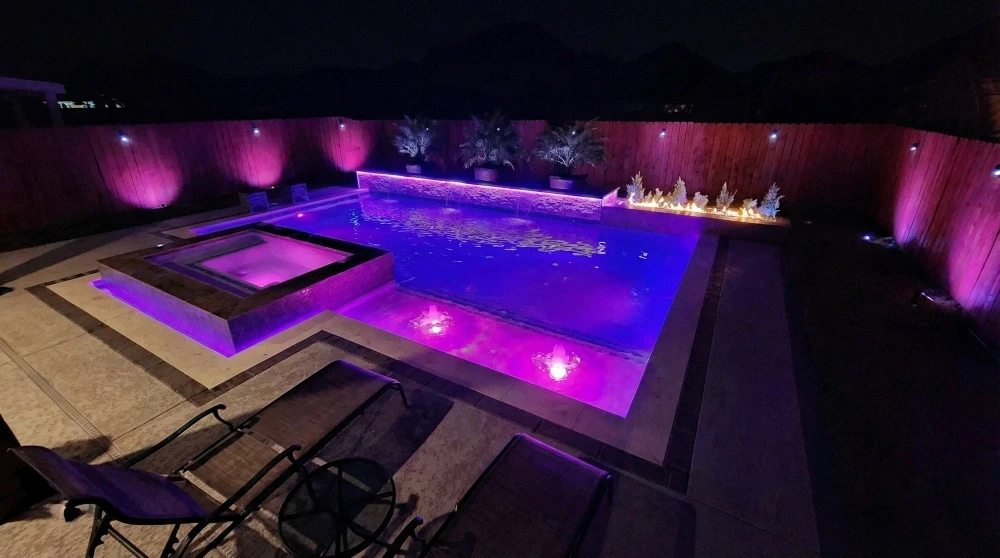
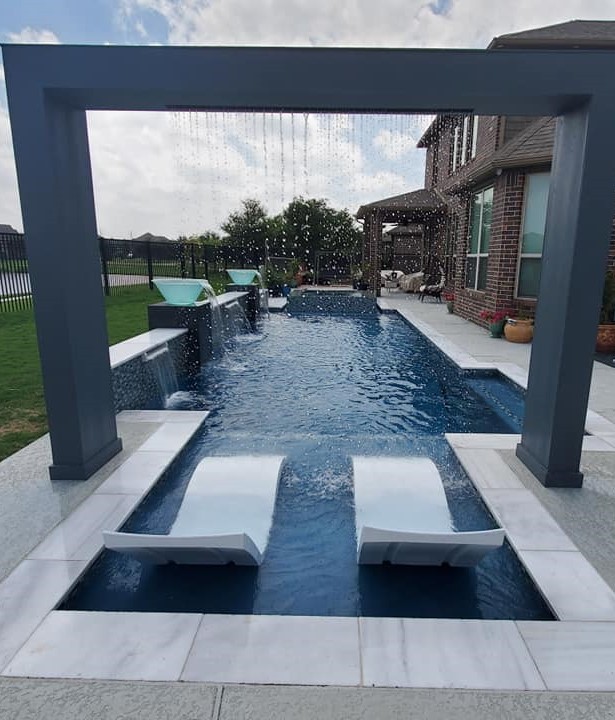
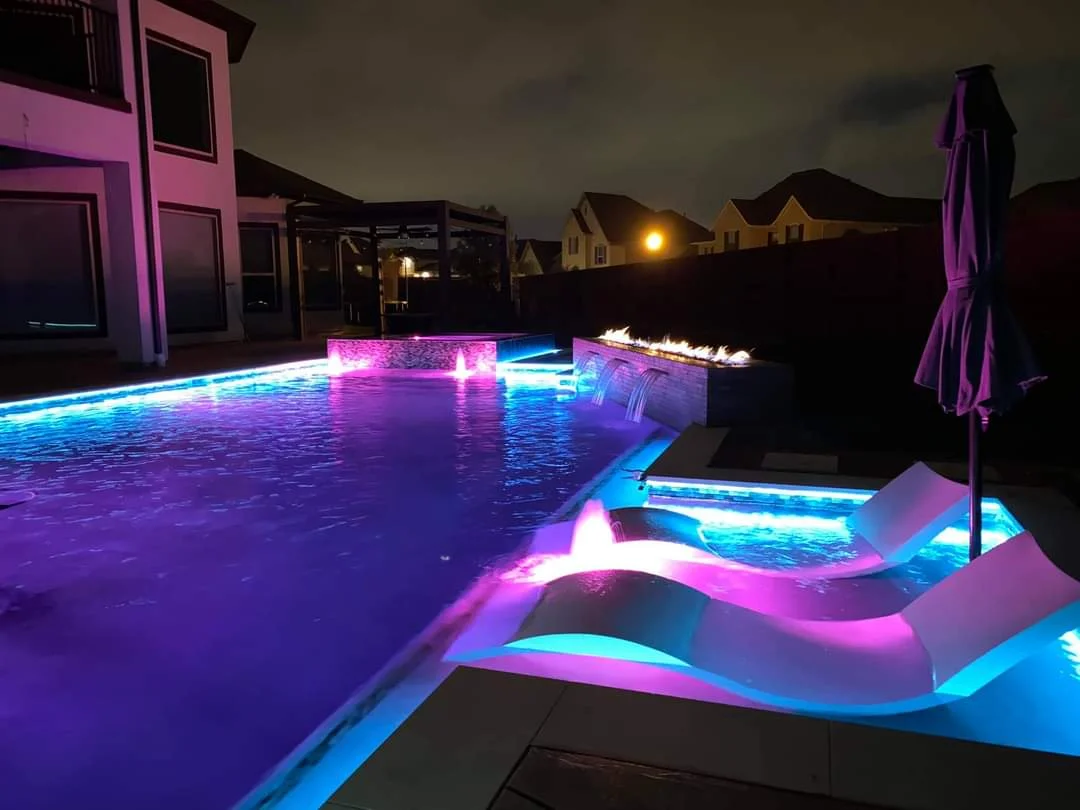
Choosing pool finishes, tile, and coping for a Richmond, TX pool involves more than picking colors. These materials affect the appearance of the water, the surfaces you touch, and how the pool connects with the surrounding patio.
Start by reviewing the materials together. Ask how each selection suits its location, what care it needs, and whether it is included in your proposal. A coordinated design should work for daily use as well as look appealing in a photograph.
At LD Outdoors Design, we create custom pools and outdoor living spaces. Here is how to approach material selections before approving your pool design.
Understand What Each Material Does
The interior finish covers the inside surface of the pool. It contributes to the pool’s appearance and provides the surface beneath your feet and hands.
Waterline tile sits around the pool near the water’s surface. It creates a visible border and may also appear on other parts of the design, depending on the plan.
Coping forms the upper edge around the pool. It connects the pool visually with the surrounding space and is a surface people may touch or sit on.
The patio extends beyond that edge, providing room for walking, furniture, and other activities.
These materials have different jobs. A product that looks attractive in one location may not suit another. Ask your builder to explain where each proposed material will be installed and why it is appropriate there.
LD Outdoors Design’s swimming pool construction process includes design planning, giving you an opportunity to discuss these selections as part of the project.
Compare Interior Finishes Beyond Their Color
An interior finish sample gives you a starting point, but color should be only one part of the discussion. Ask about the surface texture, care requirements, and appearance once the pool is filled.
Different finish systems can have different installation and startup requirements. Have your builder explain the specific products available for your project rather than choosing from broad labels alone.
Useful questions include:
What is the exact finish product being proposed?
Can I examine a physical sample?
How does its texture compare with other options?
What startup and ongoing care does it require?
What written warranty information is available?
If you have a strong preference about how a surface feels, raise it early. Ask whether there is an appropriate way to examine a completed example.
Review the finish against your plans for steps, benches, and shallow lounging areas. These are places where people may spend more time in contact with the surface.
Set Realistic Expectations for Water Color
A photograph of blue or green pool water does not tell you everything about the finish beneath it. Light, reflections, water depth, and viewing conditions can influence what you see.
When reviewing an inspiration photo, explain what attracts you. You might prefer a light appearance, a darker reflective look, or a particular relationship between the water and surrounding materials.
Ask your designer how the proposed finish may appear in your pool’s different areas. A shallow ledge and a deeper swimming area may not look identical.
Browse completed LD Outdoors Design projects to identify examples you would like to discuss. Ask whether a project uses the finish you are considering and what other factors contribute to its appearance.
Use samples, photographs, and your builder’s explanation together. Avoid expecting a small sample or digital rendering to predict the water’s appearance under every condition.
Choose Waterline Tile With the Whole Pool in Mind
Waterline tile can blend quietly into the design or create a stronger contrast. Decide how much attention you want it to draw before comparing patterns and colors.
A detailed tile selection may work well as a focal point. A simpler choice may suit a design where the water feature, coping, or surrounding architecture already provides visual interest.
Review the tile size, layout, grout color, and where the pattern will start and stop. Ask how corners, curves, steps, and other details will be handled.
Confirm that the selected product is suitable for the intended pool application. Appearance alone is not enough to establish that suitability.
If tile will also cover part of a water feature, compare those areas together. LD Outdoors Design offers swimming pool water feature construction among its pool and outdoor living services, so these surfaces can be discussed within the overall design.
Review Coping for Appearance and Everyday Use
Coping is a prominent part of the pool’s outline. Its color, dimensions, edge shape, and layout can change how the entire design looks.
Ask to examine the proposed edge detail. Think about where people will sit, place their hands, or move between the pool and patio.
Discuss how the coping will follow the pool’s shape. A curved pool may involve different cuts or joint arrangements than a straight edge. Ask to see how those details are represented in the plan.
For your Richmond backyard, consider where the coping will receive direct sun. Ask about the selected material’s behavior in those conditions without assuming any surface will remain cool throughout the day.
Also review care requirements. Find out whether the product calls for sealing or other treatment, who handles that work, and what maintenance information you will receive.
Coordinate the Pool Edge With the Patio
Coping and patio materials do not have to match exactly, but they should be reviewed side by side. Compare their colors, textures, dimensions, and joint patterns.
A contrast may help define the pool’s edge. A closer color relationship may create a more continuous appearance. Your preference should be considered alongside practical installation details.
Patio construction also needs to account for furniture, walking routes, and the overall layout. Ask how surface transitions and drainage will be addressed.
If you are planning an outdoor kitchen, include its finishes in the material review. Coordinating your outdoor kitchen selections with the pool and patio can help you avoid making several isolated choices that compete for attention.
Keep the number of competing patterns manageable. Each material should contribute to the appearance you want.
Confirm Samples, Allowances, and Final Selections
Before approving materials, review physical samples where available. Look at them together and ask about expected variation between individual pieces or production batches.
Check that the written proposal identifies your selections. If it includes an allowance instead, ask what that amount covers and how a different selection would affect the total.
Keep a record of:
Product names and colors
Finish or surface treatments
Tile sizes and layout details
Coping dimensions and edge profiles
Grout or joint selections
Areas where each material will be installed
Any decisions still outstanding
Ask for updated pricing before approving a substitution or upgrade. Clear records give you and your builder the same reference as the project moves forward.
Frequently Asked Questions About Pool Materials
Should I choose the interior finish or patio material first?
Start with the overall palette, then compare the major surfaces together. If one material is a firm preference, use it as a starting point. Avoid finalizing several selections separately without checking how they relate.
Can I choose materials from a photo of another pool?
A photo is useful for explaining your preferences. Ask whether the actual products can be identified and whether they suit your project. Review samples before approval, since photography and screen settings can affect appearance.
Will a more expensive material always be the better choice?
Price alone does not establish suitability. Compare appearance, application, installation needs, care, and warranty information. The right selection should fit your project and preferences without relying only on its price or marketing description.
Plan Your Pool Materials With LD Outdoors Design
Thoughtful material selections connect the pool’s appearance with the way you will use and care for it. Reviewing finishes, tile, coping, and patio surfaces together gives you a clearer basis for choosing.
LD Outdoors Design creates custom pools and outdoor living spaces for Richmond homeowners. Request a pool design consultation to discuss material options for your backyard.
Choosing pool finishes, tile, and coping for a Richmond, TX pool involves more than picking colors. These materials affect the appearance of the water, the surfaces you touch, and how the pool connects with the surrounding patio.
Start by reviewing the materials together. Ask how each selection suits its location, what care it needs, and whether it is included in your proposal. A coordinated design should work for daily use as well as look appealing in a photograph.
At LD Outdoors Design, we create custom pools and outdoor living spaces. Here is how to approach material selections before approving your pool design.
Understand What Each Material Does
The interior finish covers the inside surface of the pool. It contributes to the pool’s appearance and provides the surface beneath your feet and hands.
Waterline tile sits around the pool near the water’s surface. It creates a visible border and may also appear on other parts of the design, depending on the plan.
Coping forms the upper edge around the pool. It connects the pool visually with the surrounding space and is a surface people may touch or sit on.
The patio extends beyond that edge, providing room for walking, furniture, and other activities.
These materials have different jobs. A product that looks attractive in one location may not suit another. Ask your builder to explain where each proposed material will be installed and why it is appropriate there.
LD Outdoors Design’s swimming pool construction process includes design planning, giving you an opportunity to discuss these selections as part of the project.
Compare Interior Finishes Beyond Their Color
An interior finish sample gives you a starting point, but color should be only one part of the discussion. Ask about the surface texture, care requirements, and appearance once the pool is filled.
Different finish systems can have different installation and startup requirements. Have your builder explain the specific products available for your project rather than choosing from broad labels alone.
Useful questions include:
What is the exact finish product being proposed?
Can I examine a physical sample?
How does its texture compare with other options?
What startup and ongoing care does it require?
What written warranty information is available?
If you have a strong preference about how a surface feels, raise it early. Ask whether there is an appropriate way to examine a completed example.
Review the finish against your plans for steps, benches, and shallow lounging areas. These are places where people may spend more time in contact with the surface.
Set Realistic Expectations for Water Color
A photograph of blue or green pool water does not tell you everything about the finish beneath it. Light, reflections, water depth, and viewing conditions can influence what you see.
When reviewing an inspiration photo, explain what attracts you. You might prefer a light appearance, a darker reflective look, or a particular relationship between the water and surrounding materials.
Ask your designer how the proposed finish may appear in your pool’s different areas. A shallow ledge and a deeper swimming area may not look identical.
Browse completed LD Outdoors Design projects to identify examples you would like to discuss. Ask whether a project uses the finish you are considering and what other factors contribute to its appearance.
Use samples, photographs, and your builder’s explanation together. Avoid expecting a small sample or digital rendering to predict the water’s appearance under every condition.
Choose Waterline Tile With the Whole Pool in Mind
Waterline tile can blend quietly into the design or create a stronger contrast. Decide how much attention you want it to draw before comparing patterns and colors.
A detailed tile selection may work well as a focal point. A simpler choice may suit a design where the water feature, coping, or surrounding architecture already provides visual interest.
Review the tile size, layout, grout color, and where the pattern will start and stop. Ask how corners, curves, steps, and other details will be handled.
Confirm that the selected product is suitable for the intended pool application. Appearance alone is not enough to establish that suitability.
If tile will also cover part of a water feature, compare those areas together. LD Outdoors Design offers swimming pool water feature construction among its pool and outdoor living services, so these surfaces can be discussed within the overall design.
Review Coping for Appearance and Everyday Use
Coping is a prominent part of the pool’s outline. Its color, dimensions, edge shape, and layout can change how the entire design looks.
Ask to examine the proposed edge detail. Think about where people will sit, place their hands, or move between the pool and patio.
Discuss how the coping will follow the pool’s shape. A curved pool may involve different cuts or joint arrangements than a straight edge. Ask to see how those details are represented in the plan.
For your Richmond backyard, consider where the coping will receive direct sun. Ask about the selected material’s behavior in those conditions without assuming any surface will remain cool throughout the day.
Also review care requirements. Find out whether the product calls for sealing or other treatment, who handles that work, and what maintenance information you will receive.
Coordinate the Pool Edge With the Patio
Coping and patio materials do not have to match exactly, but they should be reviewed side by side. Compare their colors, textures, dimensions, and joint patterns.
A contrast may help define the pool’s edge. A closer color relationship may create a more continuous appearance. Your preference should be considered alongside practical installation details.
Patio construction also needs to account for furniture, walking routes, and the overall layout. Ask how surface transitions and drainage will be addressed.
If you are planning an outdoor kitchen, include its finishes in the material review. Coordinating your outdoor kitchen selections with the pool and patio can help you avoid making several isolated choices that compete for attention.
Keep the number of competing patterns manageable. Each material should contribute to the appearance you want.
Confirm Samples, Allowances, and Final Selections
Before approving materials, review physical samples where available. Look at them together and ask about expected variation between individual pieces or production batches.
Check that the written proposal identifies your selections. If it includes an allowance instead, ask what that amount covers and how a different selection would affect the total.
Keep a record of:
Product names and colors
Finish or surface treatments
Tile sizes and layout details
Coping dimensions and edge profiles
Grout or joint selections
Areas where each material will be installed
Any decisions still outstanding
Ask for updated pricing before approving a substitution or upgrade. Clear records give you and your builder the same reference as the project moves forward.
Frequently Asked Questions About Pool Materials
Should I choose the interior finish or patio material first?
Start with the overall palette, then compare the major surfaces together. If one material is a firm preference, use it as a starting point. Avoid finalizing several selections separately without checking how they relate.
Can I choose materials from a photo of another pool?
A photo is useful for explaining your preferences. Ask whether the actual products can be identified and whether they suit your project. Review samples before approval, since photography and screen settings can affect appearance.
Will a more expensive material always be the better choice?
Price alone does not establish suitability. Compare appearance, application, installation needs, care, and warranty information. The right selection should fit your project and preferences without relying only on its price or marketing description.
Plan Your Pool Materials With LD Outdoors Design
Thoughtful material selections connect the pool’s appearance with the way you will use and care for it. Reviewing finishes, tile, coping, and patio surfaces together gives you a clearer basis for choosing.
LD Outdoors Design creates custom pools and outdoor living spaces for Richmond homeowners. Request a pool design consultation to discuss material options for your backyard.
Question in Mind? Contact us
PHONE
Question in Mind? Contact us
PHONE
Other Blogs
Other Similar Blogs
Explore more pool design ideas, building tips, and backyard inspiration from LD Outdoors Design to help bring your dream pool to life.
Other Blogs
Other Similar Blogs
Explore more pool design ideas, building tips, and backyard inspiration from LD Outdoors Design to help bring your dream pool to life.
Other Blogs
Other Similar Blogs
Explore more pool design ideas, building tips, and backyard inspiration from LD Outdoors Design to help bring your dream pool to life.